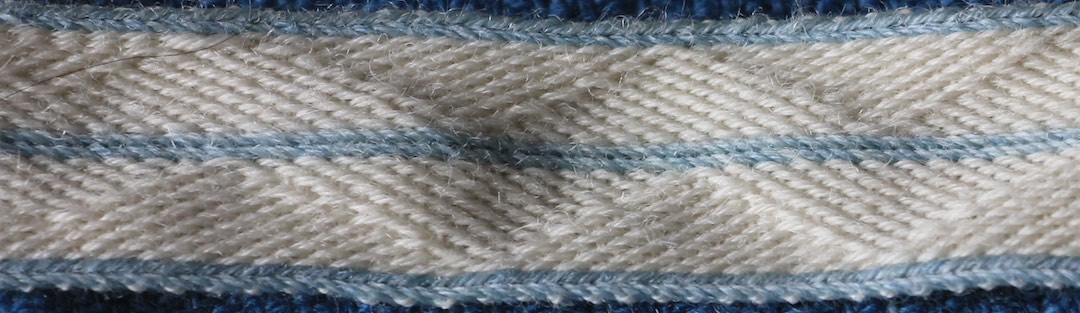
 Die folgende Borte stammt ebenfalls aus dem Grab des Keltenfürsten von Hochdorf. Die Wände der Grabkammer waren mit einem Wandbehang geschmückt, zu dem auch dieses Brettchengewebe gehörte. Die erhaltenen Reste fanden sich an mehreren Wandhaken; das Fragment von Wandhaken 385 misst beispielsweise nur 2,5 × 1,7 cm.
The following band also comes from the tomb of the Celtic chieftain of Hochdorf. The walls of the burial chamber were adorned with a wall hanging, of which this tablet-woven band formed part. The surviving remains were found attached to several wall hooks; the fragment from wall hook 385, for example, measures just 2.5 × 1.7 cm.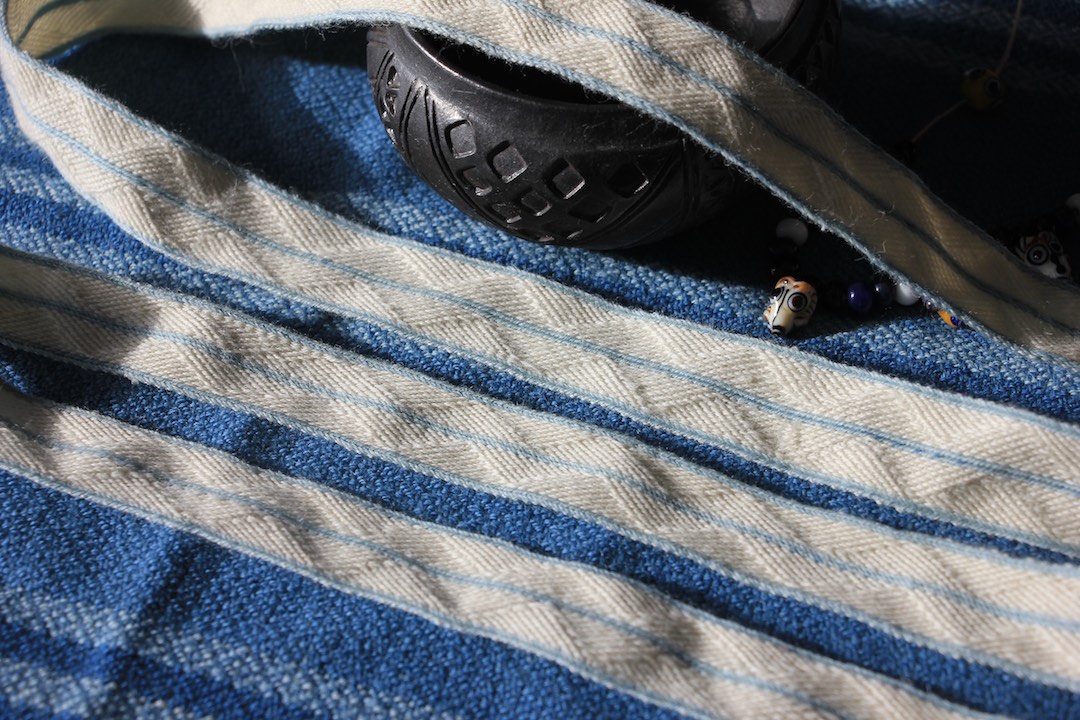
Im Gegensatz zu den übrigen brettchengewebten Funden aus Hochdorf handelt es sich um ein eher schlichtes Band, das mit nur zwei Fäden pro Brettchen gewebt wurde. Das verwendete Garn ist jedoch ebenso fein wie bei den anderen Borten.
Unlike the other tablet-woven finds from Hochdorf, this is a rather simple ribbon, woven using just two threads per tablet. The yarn used, however, is just as fine as that of the other bands.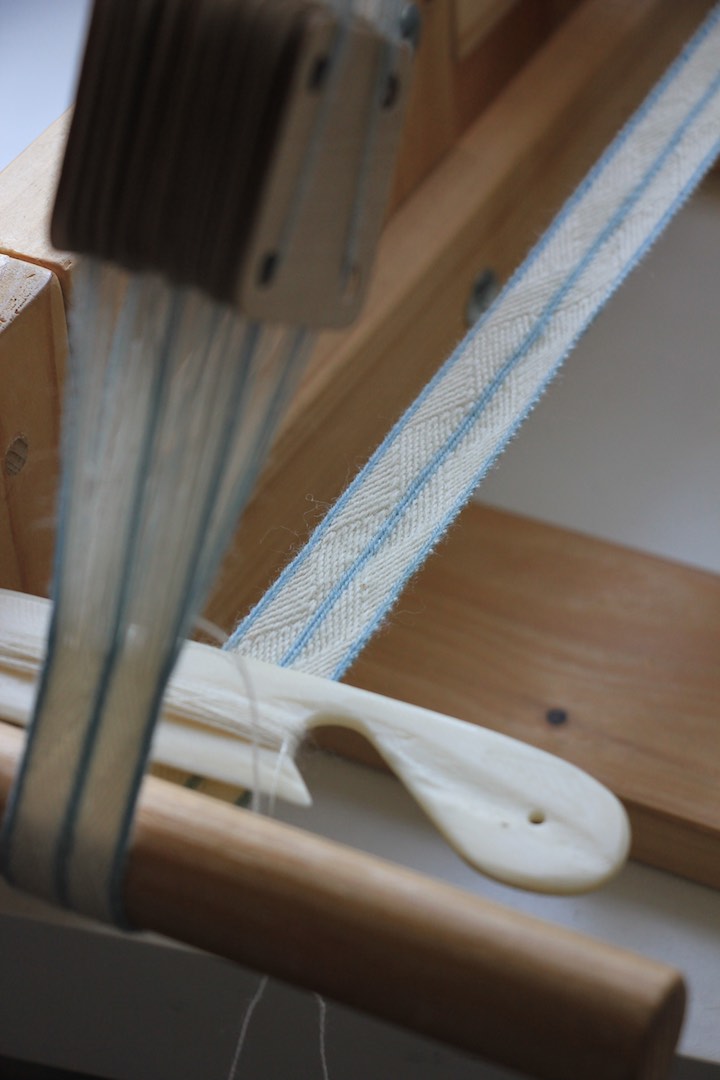
Die Skizze im Buch Hochdorf IV lässt zunächst vermuten, dass die Borte mit 16 Brettchen gewebt wurde. Aus der Beschreibung geht jedoch hervor, dass nur die Hälfte des Musters dargestellt ist. Tatsächlich besteht die Borte aus zwei Musterzonen mit jeweils zwei gegenläufigen, ineinandergreifenden Dreiecken, die durch zwei einfache Kettstränge getrennt werden.
The sketch in the book *Hochdorf IV* initially suggests that the border was woven using 16 cards. However, the description makes it clear that only half of the pattern is shown. In fact, the band consists of two pattern sections, each featuring two opposing, interlocking triangles separated by two simple warp threads.
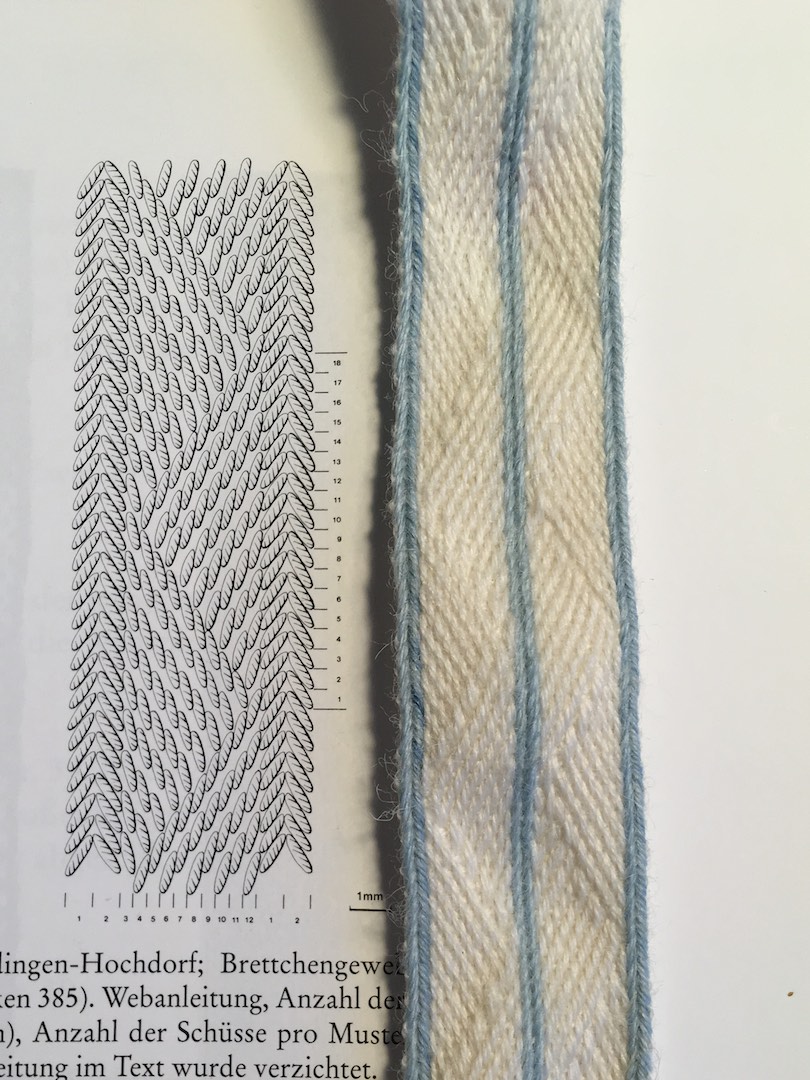
Da weder die Webanleitung noch die Beschreibung Angaben zur Farbgebung enthalten, habe ich mich für traditionell mit Waid gefärbte blaue und weiße Wolle in der Stärke 20/2 entschieden. Selbst dieses Garn ist noch deutlich dicker als das historische Material: Meine Nachwebung ist zwischen 2,1 und 2,3 cm breit, während für das Original im Buch eine Breite von 1,7 bis 1,8 cm angegeben wird.
As neither the weaving instructions nor the description contain any details regarding the colour scheme, I opted for traditionally woad-dyed blue and white wool in 20/2 count. Even this yarn is still considerably thicker than the historical material: my re-woven piece is between 2.1 and 2.3 cm wide, whilst the book specifies a width of 1.7 to 1.8 cm for the original.
Wer das Muster nachweben möchte, findet eine ausführliche Anleitung in meinem Etsy-Shop /If you would like to weave this pattern yourself, a detailed pattern is available in my Etsy shop.
Literatur:
Johanna Banck-Burgess, "Hochdorf IV", 1999
Kathrina von Kurzynsky "... und ihre Hosen nennen sie bracas", 1996 Johanna Banck-Burgess, "Mittel der Macht. Textilien bei den Kelten", 2012
Muster: eigener Entwurf basierend auf der Anleitung aus Hochdorf IV
Technik: zwei Fäden pro Brettchen (wird auch Stippengwebe genannt)