
 Im Jahr 2005 wurde bei einer Ausgrabung unter anderem dieses Grab geöffnet, das in die 2. Hälfte des 10. Jhd. datiert wird. In dem Grab befand sich ein Mann, der mit vielen Beigaben bestattet wurde, u.a. mit einem Schwert, Sattel und zwei Pferden.
Zu der Ausstattung gehörten auch mindestens fünf Textilstücke und mehrere Stücke einer brettchengewebten, broschierten Borte (Silberlahn).
In 2005, this grave was among those uncovered during an excavation. It dates to the second half of the 10th century. The grave contained a man who had been buried with numerous grave goods, including a sword, a saddle, and two horses.
Additional there were at last five textile fragments and quite a lot pieces of a brocaded band with spun silver.
Following the picture of the band in Archaeological Textiles Newsletter Nr. 47 Kirill Mikhailov 'New finds of Viking Age textiles in Ukraine and Russia' I created the pattern. For more information see my blog.
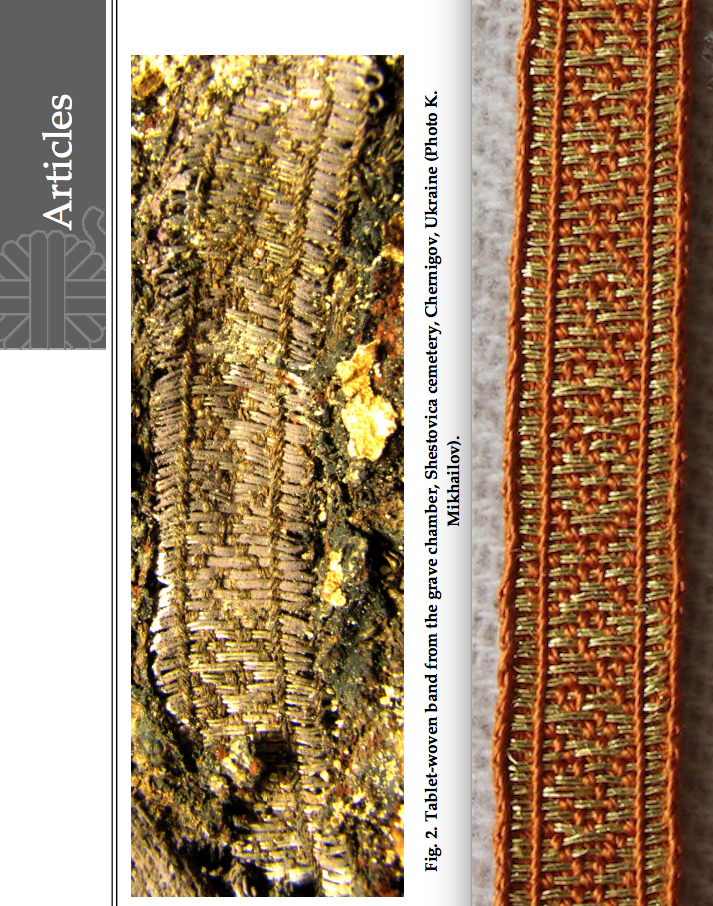
Anhand eines Bildes von der Borte aus dem Archaeological Textiles Newsletter Nr. 47 Kirill Mikhailov 'New finds of Viking Age textiles in Ukraine and Russia' erstellte ich das Muster - mehr Infos dazu gibt es in meinem Blog.
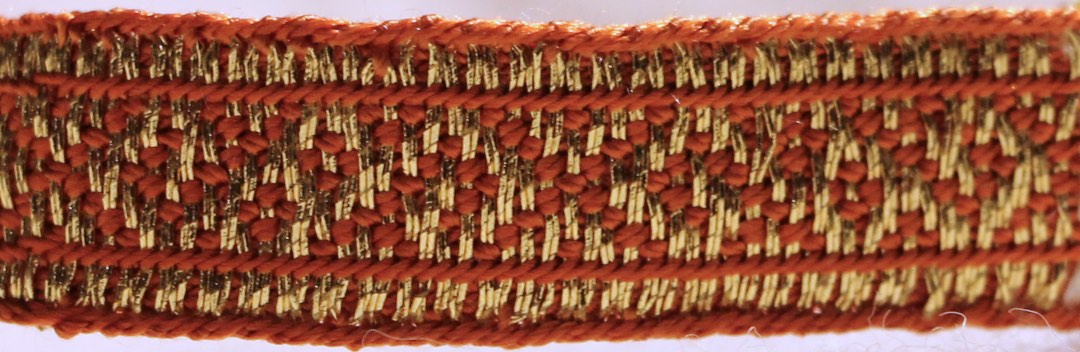
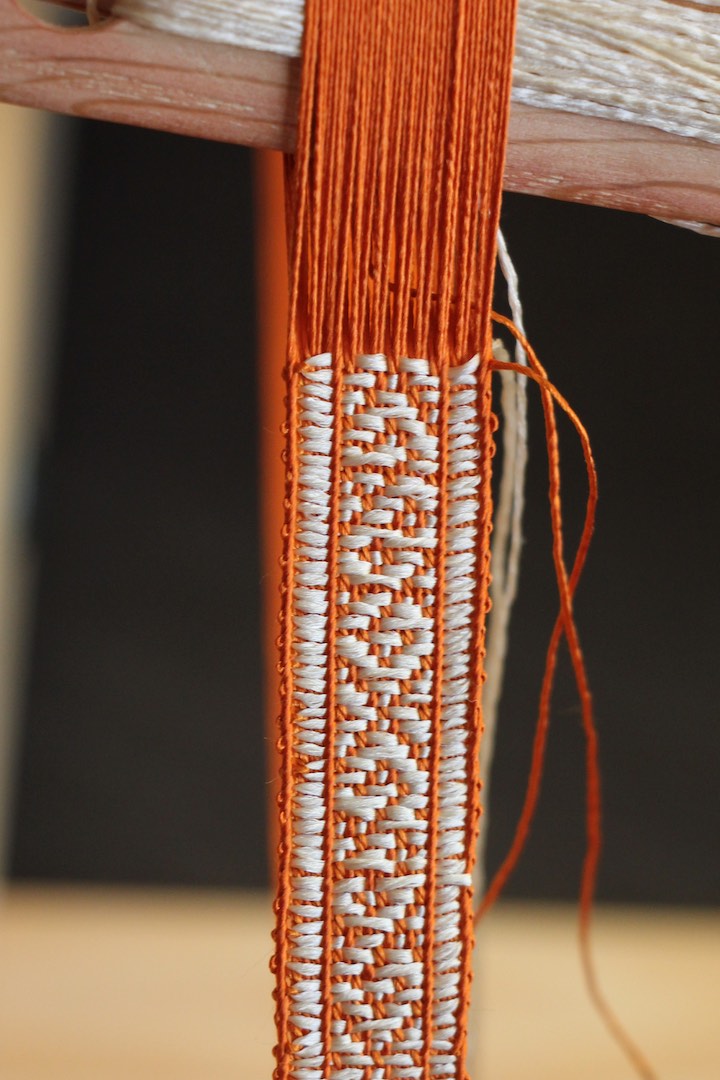
Für die Rekonstruktion verwendete ich 19 Brettchen. Sowohl für die Kette als auch für den Schuss kam orangefarbene Realseide NM 11 zum Einsatz. Die Borte wurde mit Goldlahn broschiert. Bei der ersten Version verwendete ich für die Broschierung zunächst weiße Realseide NM 11. Die rekonstruierte Borte ist 1,4 cm breit, während das Original lediglich eine Breite von 0,8 cm aufweist.
Im Gegensatz zu vielen anderen Textilien stellen goldbroschierte Borten beim Fotografieren eine besondere Herausforderung dar. Der Goldlahn reflektiert das Licht so stark, dass die feinen Musterstrukturen auf den Fotos leicht überstrahlt werden und dadurch teilweise kaum noch zu erkennen sind.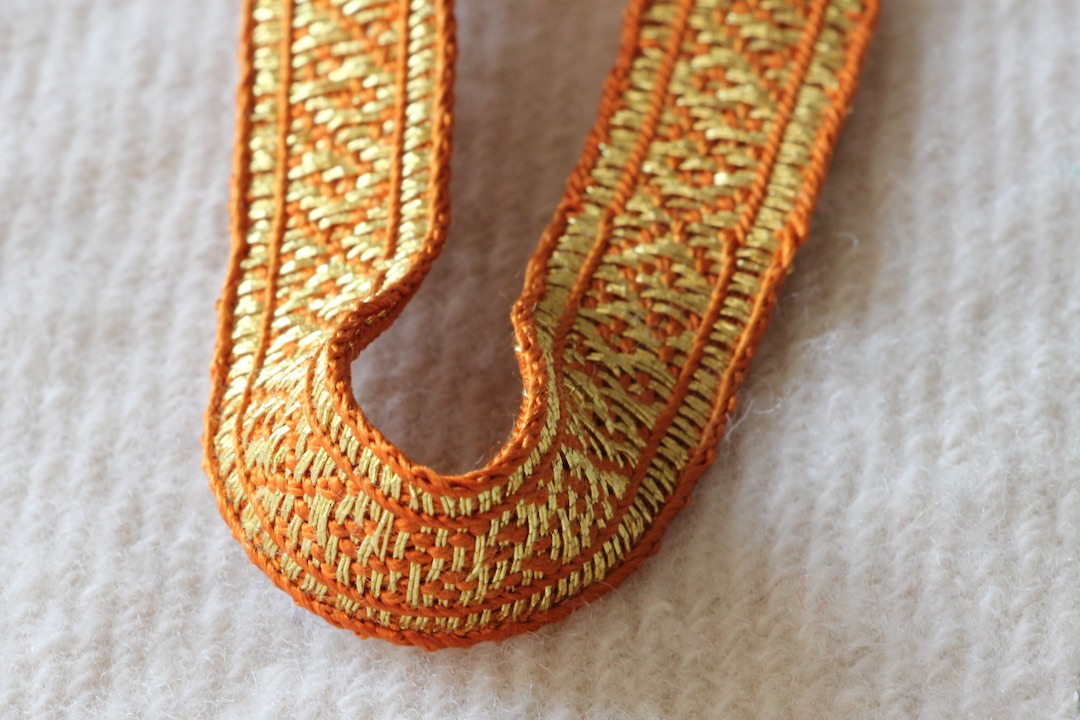
For the reconstruction, I used 19 tablets. Orange silk, NM 11, was used for both the warp and the weft. The band was brocaded with spun gold. In the first version, I initially used white silk, NM 11, for the brocading. The reconstructed band is 1.4 cm wide, whereas the original is only 0.8 cm wide.
Unlike many other textiles, gold-brocaded bands are particularly challenging to photograph. The spun gold reflects the light so strongly that the fine pattern details can easily become overexposed in photographs, making them difficult or even impossible to see.
Literatur: Archaeological Textiles Newsletter Nr. 47
Muster: eigener Entwurf
Technik: Broschieren