
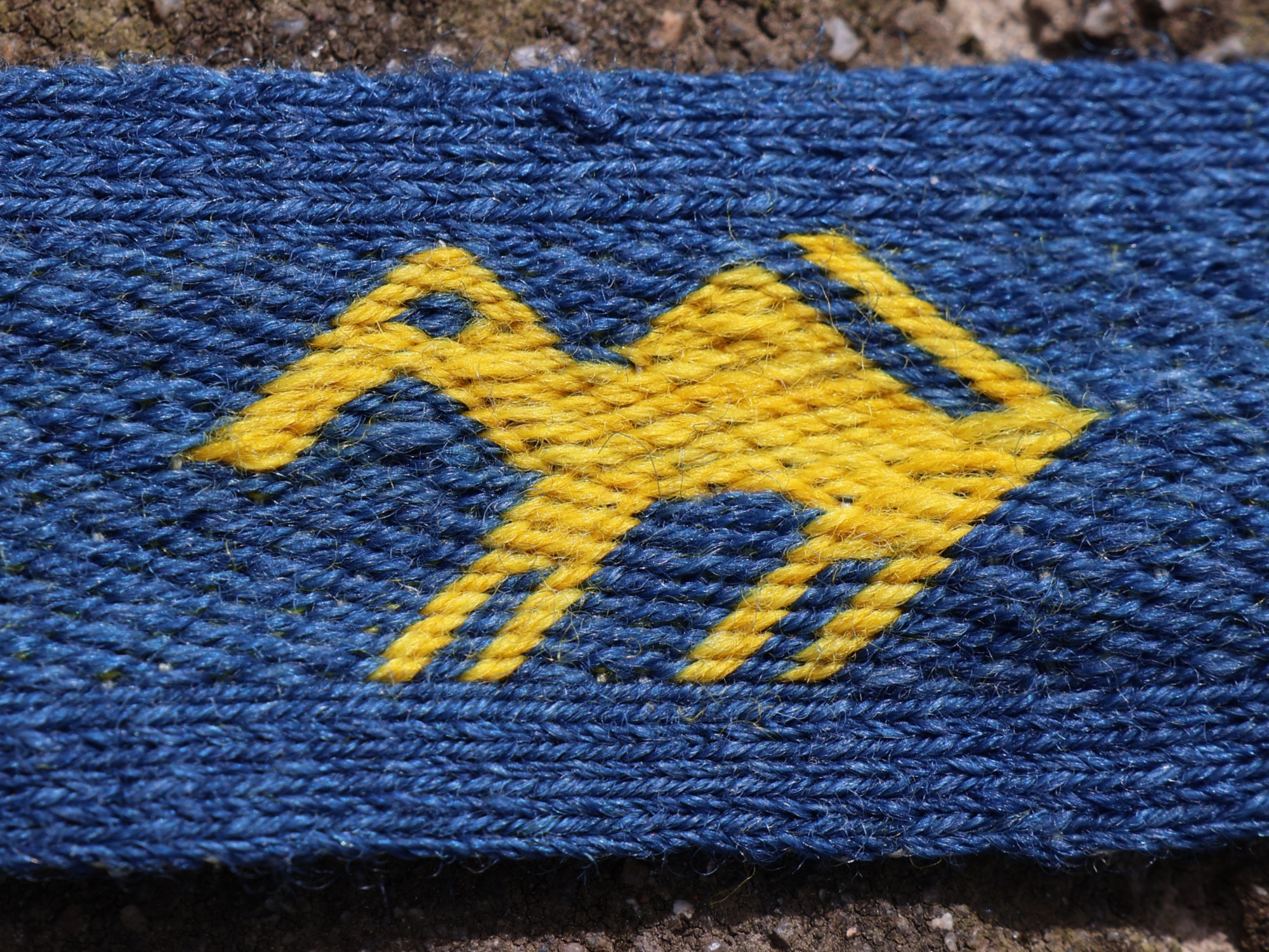
 Die Borte aus Evebø stammt aus dem 6. Jahrhundert und wurde 1889 als Teil des Fürstengrabes von Evebø in Gloppen, Norwegen, ausgegraben.
In dem Grab wurden verschiedene Textilien gefunden, darunter eine rote Tunika, die mit dieser Borte verziert war.
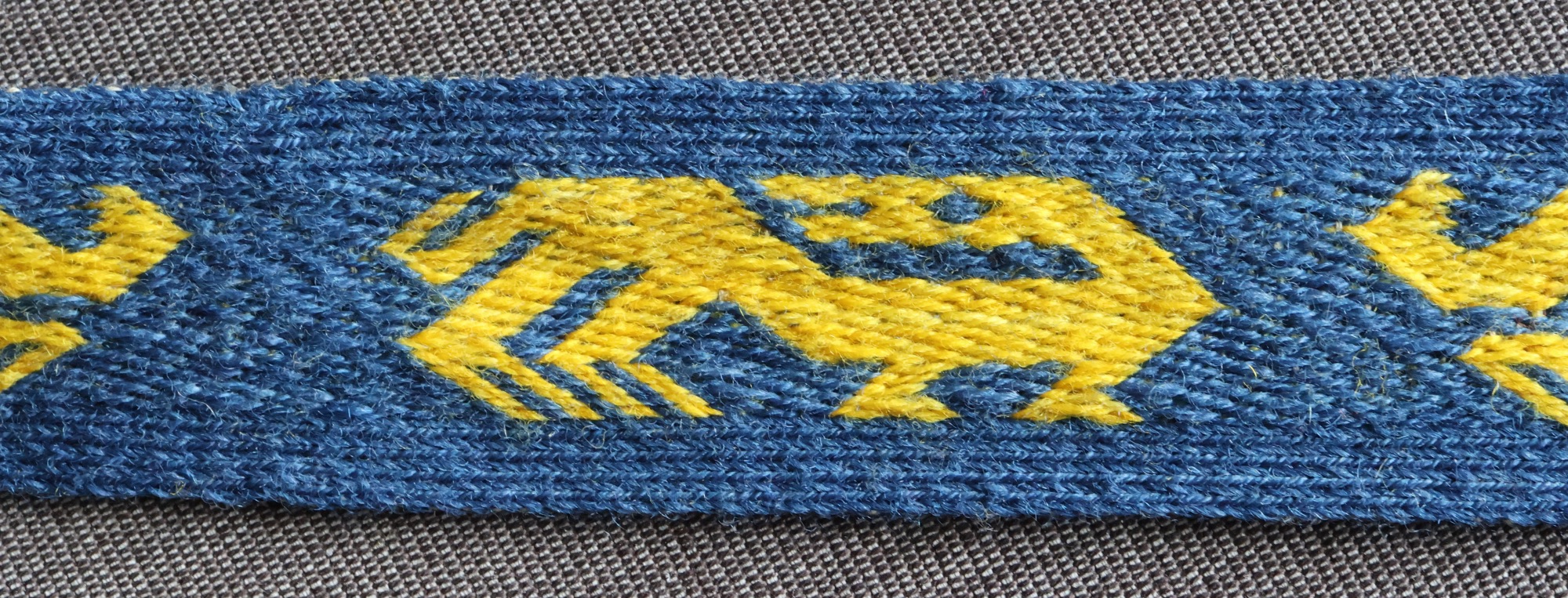
Ursprünglich handelt es sich um eine blaue Borte mit roten, fantasievollen Tiermotiven. Welche Tiere hier tatsächlich dargestellt sind, lässt sich bis heute nicht eindeutig erkennen.
The Evebø band dates to the 6th century and was excavated in 1889 as part of the princely grave at Evebø in Gloppen, Norway.
Various textiles were found in the grave, including a red tunic decorated with this band.
The original is a blue band with red, imaginative animal motifs. To this day, it is not possible to determine exactly which animals are actually depicted.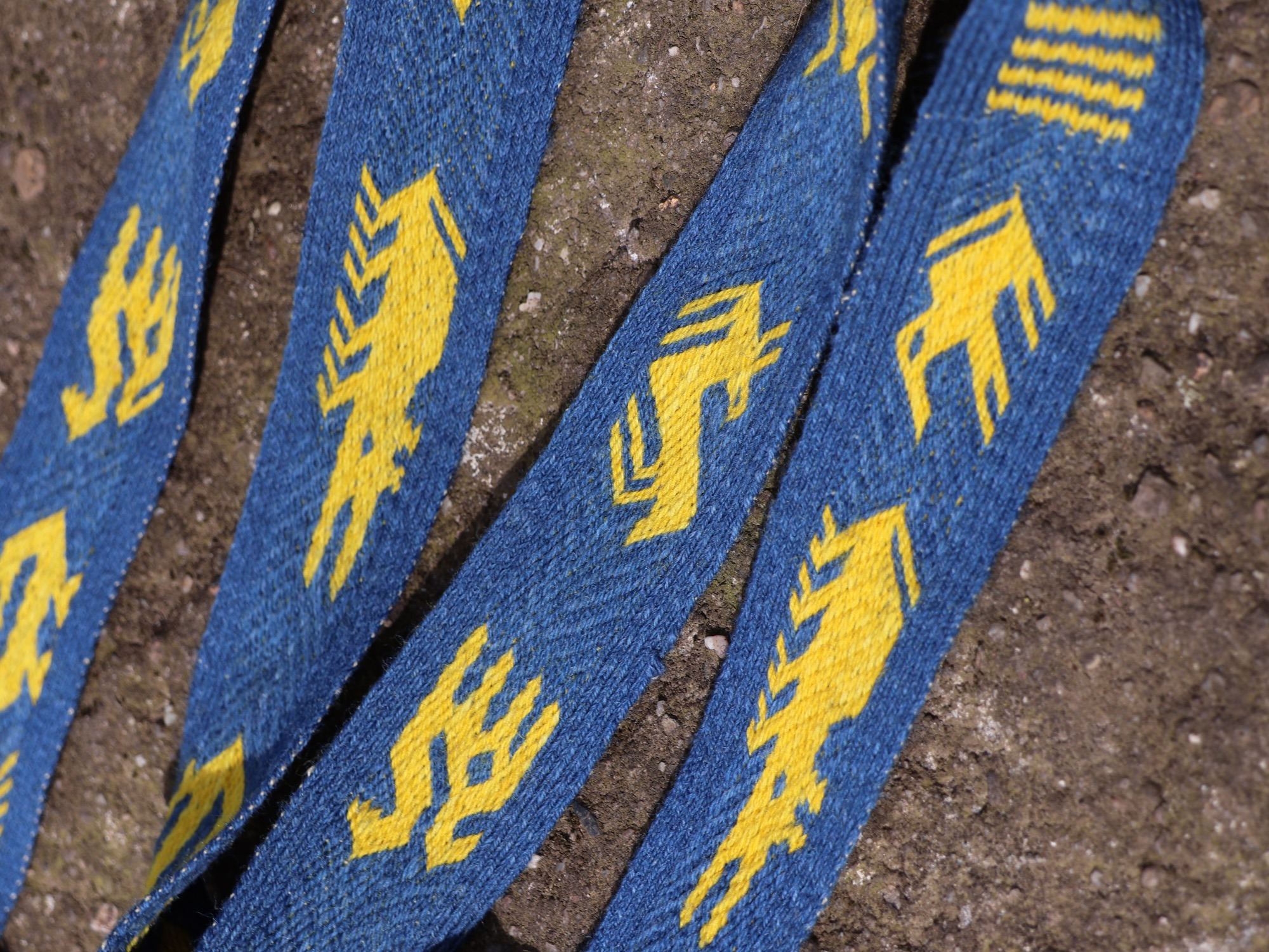
Insgesamt sind zwei Fragmente erhalten: ein längeres mit vier vollständigen und einem halben Motiv sowie ein weiteres mit einem zusätzlichen vollständigen Motiv.
Auffallend ist der breite, einfarbige Rand, bei dem alle Brettchen kontinuierlich in eine Richtung gedreht werden. In den erhaltenen Fragmenten ist bei den Randbrettchen kein Richtungswechsel zu erkennen.
Two fragments have survived: a longer one with four complete motifs and half of another, and a second fragment containing one additional complete motif.
The wide, monochrome border is particularly striking. Here, all the tablets are turned continuously in the same direction. No change of direction can be seen in the border tablets in the surviving fragments.
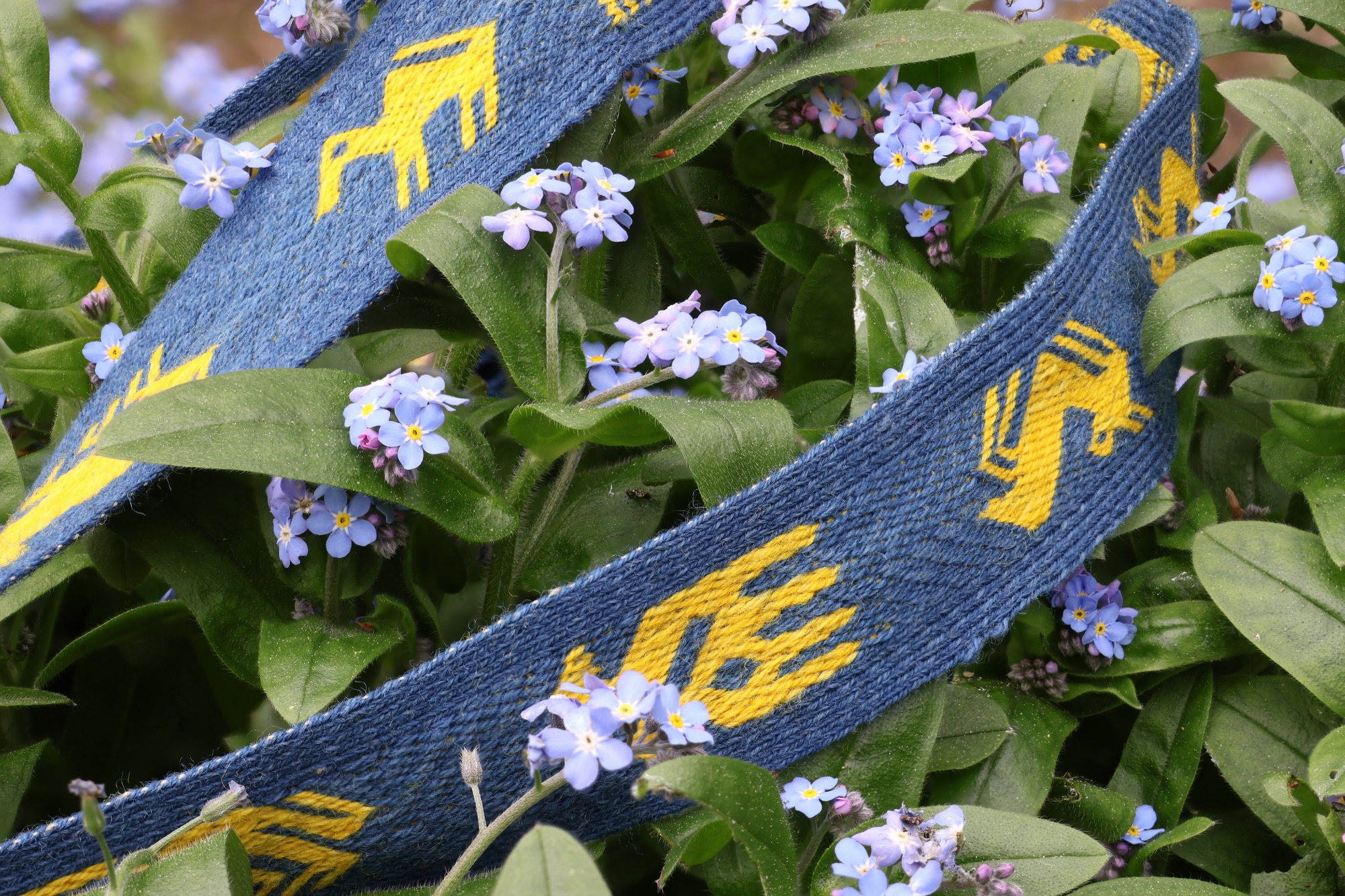
Das unvollständige Motiv habe ich nach eigenem Ermessen vervollständigt, damit sich daraus ein durchgehendes Band weben lässt. Die Motive selbst habe ich als reines Köpermuster ohne zusätzliche Details nachgearbeitet. Damit entspricht meine Version nicht zu 100 % dem Originalfund, der noch das eine oder andere zusätzliche Detail aufweist.
Besonders empfehlen möchte ich hier eine geplante Publikation von Randi Stoltz. Ich hatte 2024 die Gelegenheit, mit ihr über diesen Fund zu sprechen, und habe dabei sehr viel darüber gelernt.
I completed the incomplete motif according to my own interpretation so that it could be woven as a continuous band. I worked the motifs as a simple broken-twill pattern without additional details. My version therefore does not correspond exactly to the original find, which contains a few additional details.
I would particularly recommend a forthcoming publication by Randi Stoltz. In 2024, I had the opportunity to talk to her about this find, and I learned a great deal from our conversation.
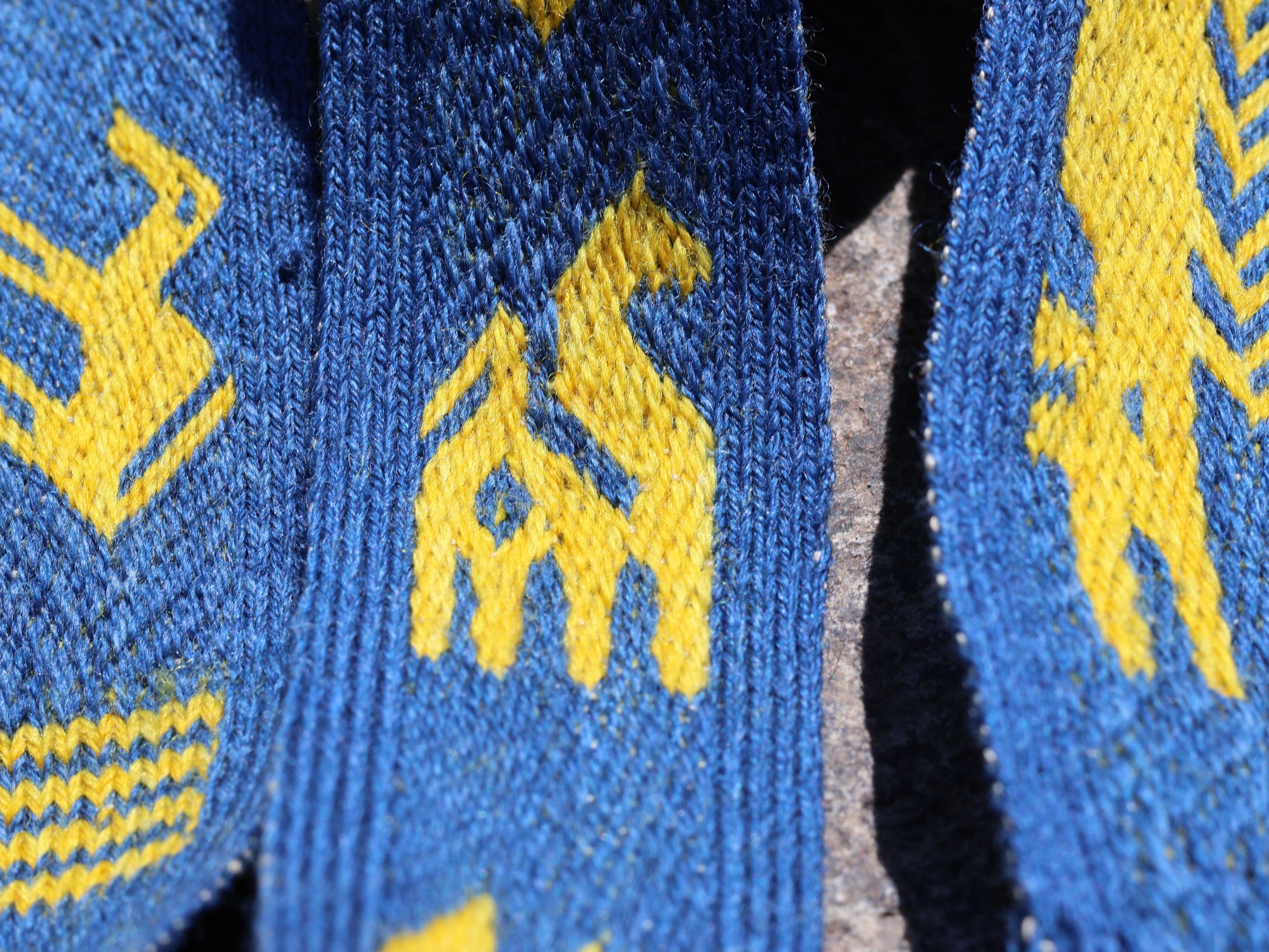
Für meine Nachwebung verwendete ich insgesamt 38 Brettchen: 20 Musterbrettchen sowie jeweils 9 Randbrettchen auf beiden Seiten. Die Randbrettchen sind abwechselnd in S- und Z-Stellung aufgezogen und werden kontinuierlich in eine Richtung gedreht.
For my version, I used a total of 38 tablets: 20 pattern tablets and 9 border tablets on each side. The border tablets are threaded alternately in S and Z and are turned continuously in the same direction.
Die Anleitung für das von mir vervollständigte Motiv habe ich hier veröffentlicht. I have published the pattern for my completed version of the motif here.
Literatur:
Gustafson, Gabriel (1890a): Evebøfundet og nogle andre ny gravfund fra Gloppen. Bergens Museums Aarsberetning for 1889.
John Griegs Bogtrykkeri: Bergen
Lise Ræder Knudsen Ancient Running Animals: Tablet-Woven borders from China and Norway . In: Marie Louise Nosch, Zhao Feng and Lotika Varadarajan. Global Textile Encounters. Oxford, 2014 p. 37-48.
Margareta Nockert, The Högom find and other Migration Period Textiles and Costumes in Scandinavia,1991
Technik: Köper
Anleitung: Eigener Entwurf